The rise of the sole trade freelancer
By Stuart Adams, Founder & Chartered Tax Adviser
··Updated 1 April 2026Limited companies used to be all the rage, but they're not the tax-efficient savings vehicles they once were. Here's why an increasing number of freelancers are opting for sole trader status in 2026/27.
The changing landscape
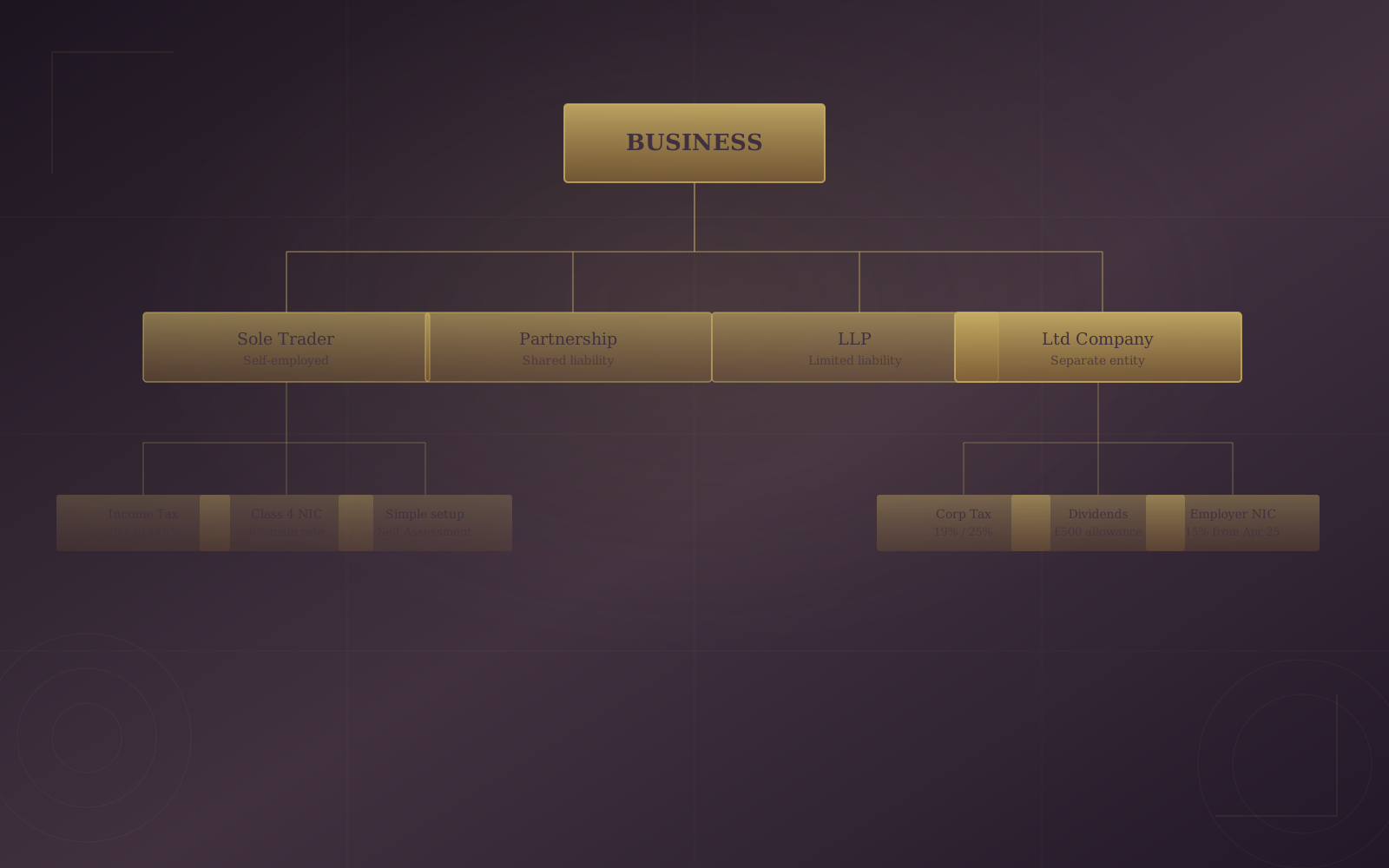
For many years, operating through a limited company was the go-to structure for freelancers and contractors. The ability to extract profits as dividends — taxed at lower rates than income — made it an attractive option. A series of tax changes have significantly eroded those benefits, and the tide has turned.
What's reduced the appeal of a limited company?
- Dividend allowance slashed – reduced from £2,000 in 2022/23 to just £500 from April 2024. A much larger slice of dividend income is now taxable.
- IR35 off-payroll working rules – changes to the rules in 2017 (public sector) and 2021 (private sector) have pushed many contractors onto payroll rates of tax and NIC, eliminating the dividend advantage entirely for those caught.
- Corporation Tax increased – the main rate is now 25% for companies with profits over £250,000, making the company envelope less efficient than it once was.
- Employer NIC increased – from April 2025, employer NIC rose from 13.8% to 15%, with the secondary threshold lowered from £9,100 to £5,000. This increases the cost of paying a salary through a company.
The sole trader advantage in 2026/27
For many freelancers — particularly those with profits below the higher rate threshold — operating as a sole trader can now be just as tax efficient, if not more so, than a limited company. Recent changes have actively improved the sole trader position:
- Class 2 NIC abolished – from April 2024, Class 2 National Insurance (previously a flat weekly charge for the self-employed) was abolished entirely, reducing the overall NIC burden for sole traders.
- Class 4 NIC reduced – also from April 2024, the main Class 4 NIC rate was cut from 9% to 6% on profits between £12,570 and £50,270 (2% above that). This is a meaningful saving for most self-employed individuals.
- Simplicity – no Companies House filings, no corporation tax returns, no dividend paperwork or board minutes.
- Lower costs – no accountancy fees for company accounts, no annual filing fees, reduced compliance burden.
- Cash basis now the default – from April 2024, the cash basis of accounting became the default for sole traders (you can opt out if preferred), and the previous £150,000 turnover limit was removed. This simplifies record-keeping for most freelancers.
When does a limited company still make sense?
A limited company may still be the better option if:
- Your profits are significantly above the higher rate threshold and you want to retain profits in the business
- You need limited liability protection and cannot adequately insure against risk
- You're working with clients who contractually require a limited company structure
- You fall outside IR35 and can legitimately extract profits as dividends
Our advice
The gap between sole trader and limited company has narrowed considerably. With NIC reductions benefiting sole traders and higher costs attached to limited companies, many freelancers are finding that simplicity wins. Every situation is different, though — get in touch and we'll help you work through the numbers for your specific circumstances.
Expert Advice
Need advice on freelancers & contractors?
Our Private Client Tax Services can provide tailored advice on freelancers & contractors and related matters.

Written by
Stuart Adams
Founder & Chartered Tax Adviser
Stuart is a Chartered Tax Adviser (CTA) and founder of Bearstone. He advises high-net-worth individuals, entrepreneurs, and business owners on UK and international tax planning.
Connect on LinkedIn